

Introduction
A good night’s sleep is one of the most powerful tools for better health, energy, and productivity. Yet millions of people struggle to fall asleep—or stay asleep—every night.
According to the Centers for Disease Control and Prevention, more than one-third of adults don’t get enough sleep. Poor sleep doesn’t just make you tired—it affects your mood, metabolism, immune system, and mental clarity.
The solution isn’t complicated. It starts with sleep hygiene—a set of simple daily habits that can dramatically improve your sleep quality.
What Is Sleep Hygiene?
Sleep hygiene refers to the habits, routines, and environmental factors that help you fall asleep faster and stay asleep longer.
Good sleep hygiene supports:
- Physical recovery and repair
- Brain function and memory
- Emotional balance
- Immune health
In short, better sleep = better life.
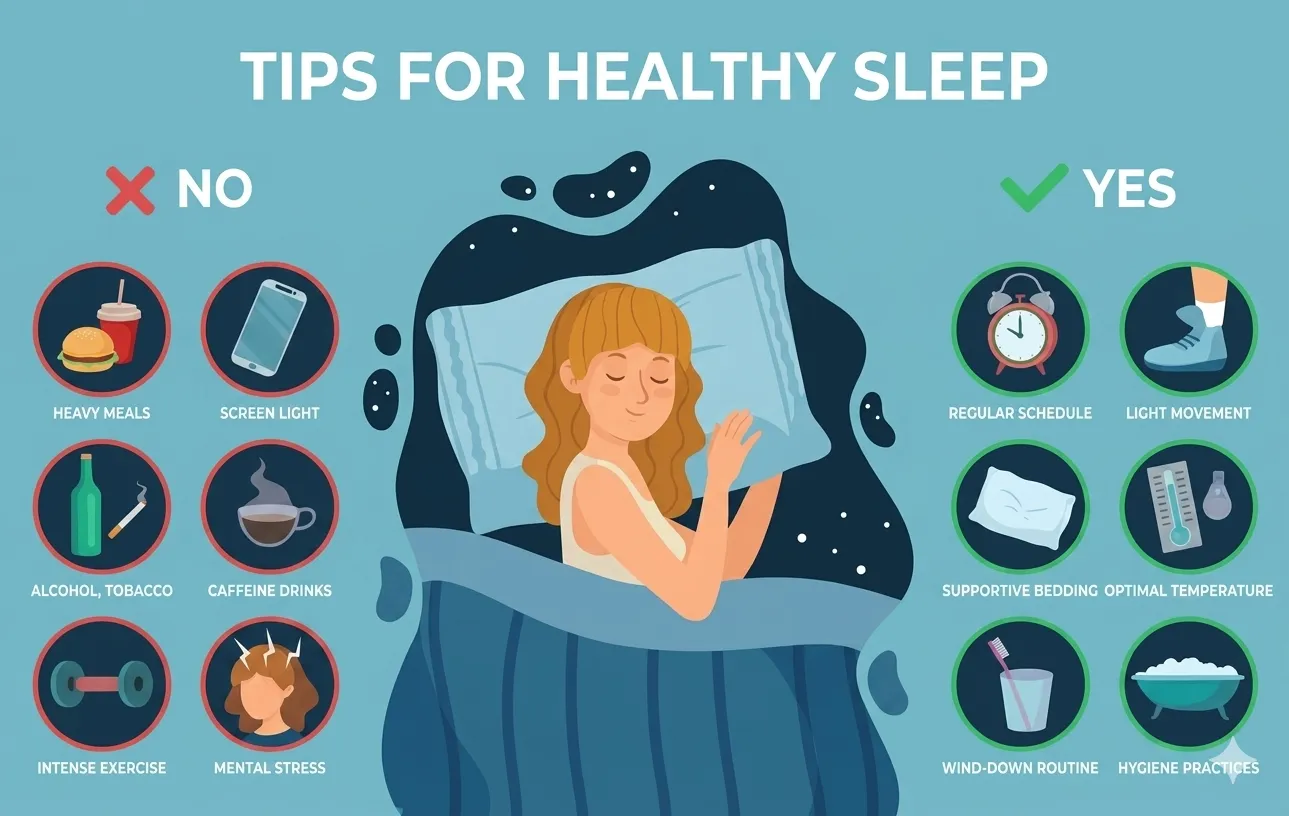
Why Sleep Hygiene Matters
Sleep is not just about quantity—it’s also about quality.
A healthy sleep pattern means:
- Falling asleep easily
- Staying asleep through the night
- Waking up refreshed
Experts recommend 7–9 hours of sleep per night for most adults, though individual needs may vary.
Even organizations like the National Sleep Foundation emphasize consistent sleep schedules as a key factor for long-term health.
Best Sleep Hygiene Tips for Better Rest
1. Create a Sleep-Friendly Environment 🛏️
Your bedroom should be a place designed for rest—not distraction.
Optimize your sleep space:
- Keep the room cool (around 18–20°C)
- Use blackout curtains to block light
- Reduce noise or use white noise
- Invest in a comfortable mattress and pillows
Pro tip: Only use your bed for sleep and relaxation—not work or scrolling.
2. Stick to a Consistent Sleep Schedule ⏰
Going to bed and waking up at the same time every day helps regulate your internal clock.
This improves:
- Sleep quality
- Energy levels
- Hormone balance
Even on weekends, try to stay close to your regular schedule.
3. Avoid Food and Stimulants Before Bed 🍔☕
What you consume affects how you sleep.
Avoid before bedtime:
- Heavy meals (eat at least 2–3 hours earlier)
- Caffeine (after lunch)
- Alcohol (disrupts deep sleep)
- Nicotine (a stimulant)
These substances can interfere with your ability to fall and stay asleep.
15 Best Foods and Drinks for Better Sleep (Backed by Science)
4. Build a Relaxing Night Routine 🌙
Your body needs signals that it’s time to wind down.
A calming routine can help you fall asleep faster.
Try this:
- Read a book in soft lighting
- Take a warm bath
- Practice deep breathing or light stretching
- Listen to calming music
Avoid screens and stressful activities at least 1 hour before bed.
5. Manage Daytime Habits for Better Sleep ☀️
What you do during the day impacts your sleep at night.
Healthy daytime habits:
- Exercise regularly (but not too late)
- Get natural sunlight exposure
- Limit long or late naps
Short naps (20–30 minutes) are okay—but avoid napping too close to bedtime.
6. Track Your Sleep Patterns 📊
If you’re struggling with sleep, tracking your habits can help identify the cause.
Keep a sleep diary:
- Bedtime and wake-up time
- Caffeine or alcohol intake
- Exercise timing
- Screen usage
Patterns will reveal what’s helping—or hurting—your sleep.
7. Reduce Stress Before Bed 🧘♀️
Stress is one of the biggest causes of poor sleep.
To relax your mind:
- Practice meditation
- Try deep breathing
- Write down worries before bed
A calm mind leads to deeper sleep.
Common Sleep Mistakes to Avoid
- Using your phone in bed
- Drinking coffee late in the day
- Irregular sleep schedule
- Sleeping in a noisy or bright room
- Overthinking before bedtime
Fixing these habits can dramatically improve your sleep quality.
Final Thoughts
Good sleep doesn’t happen by chance—it’s built through consistent habits.
By improving your sleep hygiene, you can:
- Fall asleep faster
- Sleep more deeply
- Wake up feeling refreshed
Start small. Change one habit at a time. Over time, these small improvements will transform your sleep—and your life.
FAQs About Sleep Hygiene
What is the most important sleep hygiene habit?
Consistency—going to bed and waking up at the same time daily—is key.
How long does it take to improve sleep?
You may notice changes within a few days, but lasting improvements take a few weeks.
Can sleep hygiene fix insomnia?
It can significantly help, but chronic insomnia may require medical support.
Is it okay to nap during the day?
Yes, but keep naps short (20–30 minutes) and early in the day.