

When people think about weight loss, intense workouts and exhausting cardio sessions often come to mind. But one of the most effective fat-loss tools is something far simpler: walking.
Walking may not seem as intense as running or HIIT, but when done consistently and strategically, it can become a powerful method for burning calories, improving fitness, and supporting long-term fat loss.
So—is walking to lose weight actually effective?
Absolutely.
Here’s exactly how walking helps with weight loss and 7 expert-backed ways to make it work faster.
Why Walking Is Effective for Weight Loss
Weight loss ultimately depends on creating a calorie deficit—burning more calories than you consume.
Walking helps by increasing your daily energy expenditure without placing excessive stress on your body. Because it’s low-impact and sustainable, most people can do it frequently enough to produce meaningful results over time.
Unlike extreme workout plans that are difficult to maintain, walking offers a realistic approach to fat loss that fits into everyday life.
How Walking Helps Burn Fat
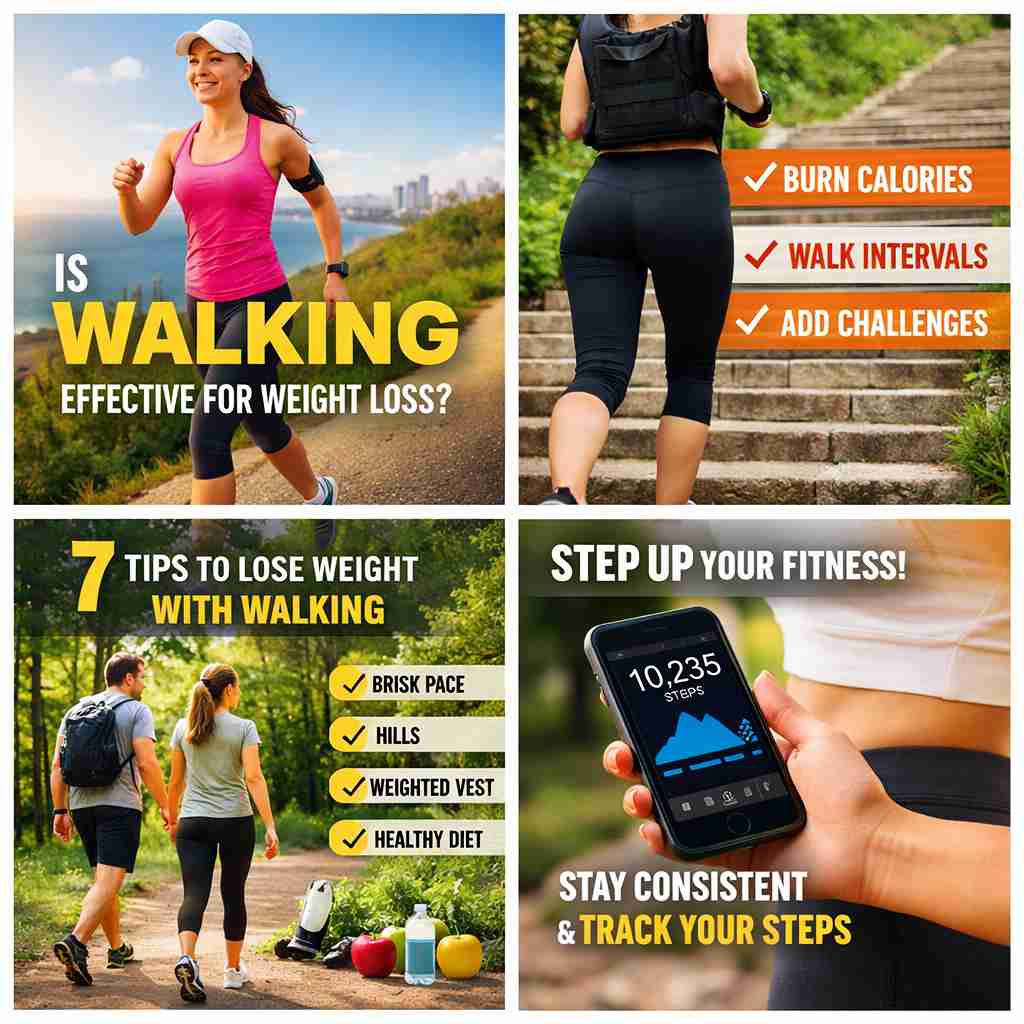
1. It Increases Daily Calorie Burn
Every walk contributes to your total daily energy expenditure. Even moderate walking can significantly increase the number of calories burned compared to remaining sedentary.
Over time, those extra calories burned add up and support consistent fat loss.
2. It Helps Reduce Belly Fat
While spot reduction is a myth, walking helps lower overall body fat percentage—which includes abdominal fat.
Studies have linked regular walking to reductions in:
- Waist circumference
- Body fat percentage
- Visceral fat
- Body Mass Index (BMI)
3. It Supports a Healthy Metabolism
Brisk walking engages multiple lower-body muscle groups, helping preserve lean muscle mass and maintain metabolic health while dieting.
4. It Reduces Stress-Related Weight Gain
Walking, especially outdoors, can reduce cortisol and improve mood—both of which may help limit emotional eating and stress-related fat retention.
7 Powerful Ways to Make Walking More Effective for Weight Loss
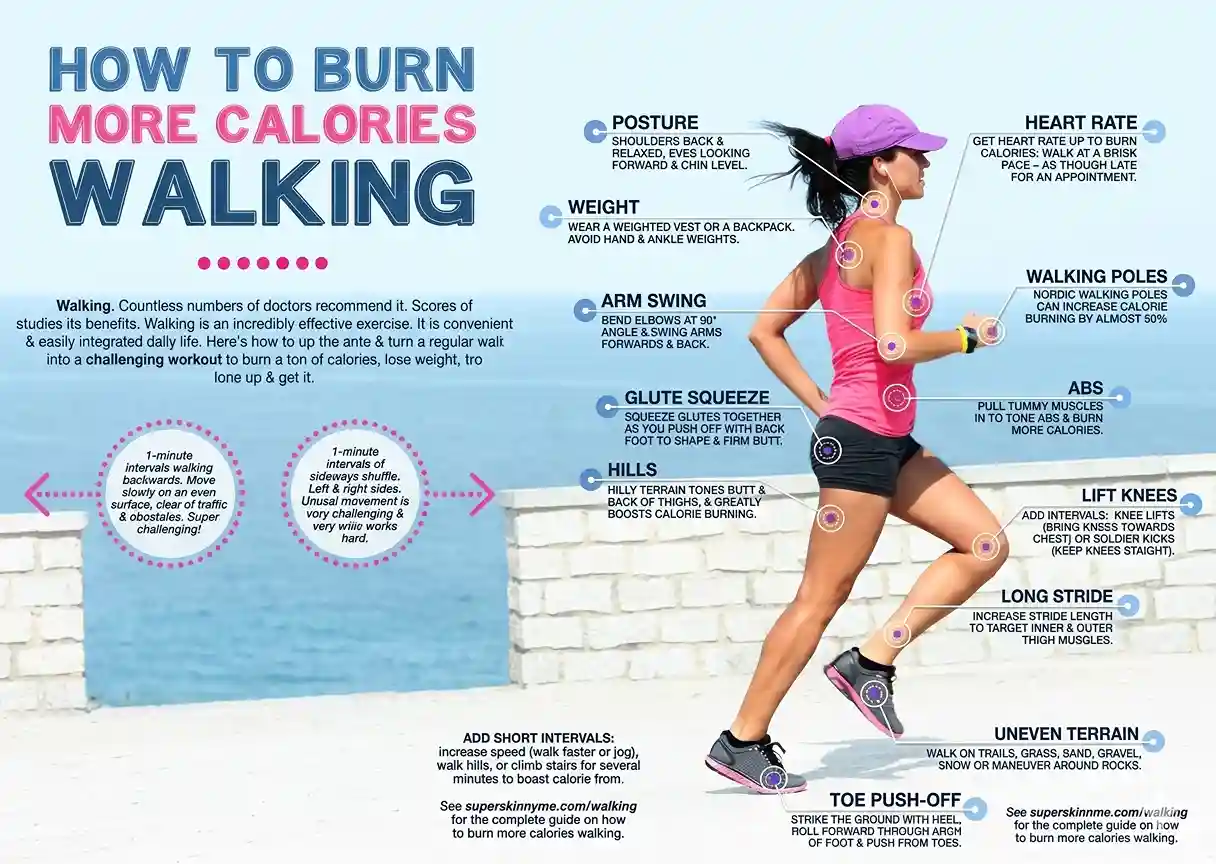
1. Walk Faster Than You Normally Would
Casual strolling is beneficial for general health, but brisk walking is more effective for fat loss.
Aim for a pace where:
- Your heart rate rises
- Breathing becomes heavier
- You can still talk, but not sing comfortably
The higher the intensity, the greater the calorie burn.
2. Increase Your Walking Duration
Longer walks equal more calories burned.
A good target for fat loss is:
- 30–60 minutes per session
- 5–6 days per week
If you’re a beginner, start smaller and gradually build up.
3. Add Speed Intervals
Alternating between moderate and fast walking increases workout intensity and calorie expenditure.
Example Interval Routine:
- 3 minutes brisk walking
- 1 minute fast-paced walking
- Repeat for 20–30 minutes
This can boost fat burning while making your walks less monotonous.
4. Incorporate Hills or Incline Walking
Walking uphill dramatically increases effort and muscle activation.
Benefits include:
- Higher calorie burn
- Greater glute engagement
- Improved cardiovascular fitness
Try:
- Outdoor hills
- Stair climbing
- Incline treadmill walking
5. Increase Your Daily Step Count
Fat loss isn’t only about workouts—your total daily movement matters.
Aiming for 8,000–12,000 steps per day can significantly improve energy expenditure.
Simple ways to add steps:
- Take the stairs
- Walk during calls
- Park farther away
- Use walking breaks throughout the day
6. Add Resistance for Advanced Progression
Once walking becomes easy, adding resistance can help increase difficulty.
Options include:
- Weighted vest
- Light backpack
- Incline + resistance combination
Use resistance carefully and progress gradually.
7. Combine Walking With Smart Nutrition
Walking alone can help—but pairing it with proper nutrition dramatically improves results.
Focus on:
- Eating enough protein
- Prioritizing whole foods
- Managing portion sizes
- Staying hydrated
- Avoiding excessive liquid calories
Remember: You can’t outwalk a consistently poor diet.
Beginner Walking Plan for Weight Loss
Week 1–2
- 15–20 minutes
- 4x per week
- Comfortable pace
Week 3–4
- 25–30 minutes
- Add brisk intervals
Week 5+
- 30–45 minutes
- Include hills/incline
Walking vs Running for Weight Loss
Although running burns more calories per minute, walking offers advantages many people overlook:
| Walking | Running |
|---|---|
| Lower impact | Higher joint stress |
| Easier recovery | More fatigue |
| Sustainable daily | Harder to maintain |
| Beginner-friendly | Higher injury risk |
For many people, walking is more sustainable—and sustainability wins long term.